
COPYWRITING BY Justin
23.08.2021
The competitive smartphone market serves as an ideal environment to study the various advertising approaches and marketing strategies employed by major smartphone manufacturers, as well as their effectiveness.
With customers’ decisions to purchase a smartphone heavily tied to their technology and features, we thought it would be interesting to see which marketing strategies work best (if at all) and thus provide useful pointers that help marketers isolate what’s most effective.
Apple

Lifestyle & Personality
Apple’s advertising focuses on branding itself as a lifestyle choice rather than selling technology for its own sake. This is a strategy that has been successfully implemented by other brands, including Coca-Cola’s marketing.
Despite a lack of variety and products that are more expensive on average when compared to their competitors, their popularity is evidence for the significance that customer loyalties play in brand choice that was built up with consistent high-quality marketing – reinforcing what we already know about the effectiveness of marketing that focuses on a product’s relevance to customer’s lifestyles, sentiment and emotions.
It is interesting to note that even Samsung, with phone sales outpacing Apple by 5 per cent and Xiaomi by 8 in Q1 2021, uses a similar line in their visual advertising and has also experienced tremendous success.
Through its promise to deliver products that fulfil customer needs, Apple allocates a sizable budget on marketing to engage its customers and learn what they would like to see in their next product – from ergonomics, design and user interface to features and real-world applications. This is arguably the largest contributor to the global success of its products.
From 2010 to 2015, Apple increased marketing spending from just over US$1 billion to US$1.8 billion. Apple’s marketing and R&D expenditure to design customer-centric products is the epicentre of a lawsuit the company filed against Samsung in 2011 for copying its design and features, which was finally settled in 2018.
Surprisingly, despite Apple’s notorious customer service extending highly conditional support, red tape, and non-ad hoc troubleshooting policy, Apple products remain popular – suggesting some merit to either its replacement policy or clear and consistent advertising strategy.
Well-Received Advertising & Commercials
Overall, Apple’s advertising and commercials appear to be the most well-received compared to other smartphone manufacturers, which regularly receive millions of views each time they are released. This suggests that its advertising and branding campaigns have at least met with modest success.
Interestingly, the comments section of official Apple advertisements on YouTube is closed, possibly to curb bots by competitors and other parties generating fake comments. This is a practice that’s in line with studies that agree with the theory of negative comments, irrespective of genuineness, having the ability to affect the way in which a message is perceived by an audience. Unfortunately, online anonymity makes it easy for a few users to flood the comments sections on social media, often via the same bots used to falsify user counts in politically and socially sensitive issues. Yes, even mega corporations are not immune to online harassment.
Samsung
With a global market share of 21 percent, Samsung is by far the most successful Android-based smartphone manufacturer, overshadowing even Google’s HTC Dream, the original developer of the Android OS.
Samsung’s penchant for innovation began with the introduction of large-screen smartphones via the Galaxy Note (a trend emulated by all smartphone manufacturers today). Today, Samsung also produces phones in a diverse price range to cater to different customers.
In 2018, it strengthened its offerings of phones priced in mid-to-low ranges, in response to the rise of Chinese smartphone brands that included Oppo, Vivo, Xiaomi, OnePlus, and RealMe. Samsung’s marketing efforts played a key role in helping the company to accurately identify its customers’ needs, before implementing wide-ranging advertising and promotional campaigns to reach their intended audience. Samsung now holds a 22 percent global market share despite fierce competition from the Chinese brands mentioned above.
In 2019, it spent US$1.98 billion on marketing, producing some of the most effective campaigns and advertising, including the hilarious “Samsung makes fun of Apple” series of video commercials:
Good Marketing PR Saves Samsung From Burning Battery & Folding Screen Crisis
Samsung’s handling of two of the most disastrous PR incidents in 2016 and 2019 demonstrates the importance of marketing in maintaining good relations with customers and brand image – nothing short of a PR miracle.
In 2016, when the Galaxy Note 7’s batteries were setting the devices on fire, Samsung’s marketing immediately acknowledged the issue by offering an opportunity to replace all Galaxy Note 7s with free Galaxy S7s in return. Instead of burying the crises with the Galaxy Note 7, Samsung went on to reassure customers that they would not repeat the same mistake with the Galaxy Note 8 – a move that eventually rebuilt the company’s reputation, proving again that customers appreciate companies that take their responsibilities seriously.
Huawei
Whether or not banning Huawei from the Google store and future collaboration with it is justified (we’re not here to discuss politics), it does show the importance that customers place on apps and services such as gmail, Google Play, productivity apps, games, as well as the feeling of security of their devices – all of which are elements that directly pertain to their lifestyle choices. The result: Huawei’s market share plummeted from 20 percent in Q2 2020 to just 4 percent in Q1 2021.
Post-COVID-19, Huawei captured 20 percent of the global market share in Q2 2020. However, the banning of Google services within its device offerings resulted in a sharp drop to 4 percent in Q1 2021, while its regional competitor Xiaomi jumped to 14 percent.
Using Affordability to Grow Market Share
When it comes to reaching more customers, prices do matter. Huawei, alongside other Chinese brands, focuses on providing low price points for quality products to penetrate deep into the market. The pervasiveness of the products in turn creates brand awareness and attention towards their product offerings.
Building Brand Awareness Through Pervasive Product Presence
Both Huawei and Xiaomi aim at deep market penetration to boost the visibility of their products to consumers. Through affordable quality products, their marketing strategy tries to put their products into the hands of as many users as possible – generating significant passive brand awareness at minimal extra cost.
Recognising that this strategy can backfire if customers report negative experiences of their products, Huawei and Xiaomi both provide exceptional post-sales customer support to maintain their reputation as companies that care beyond sales alone.
Sony (Xperia)
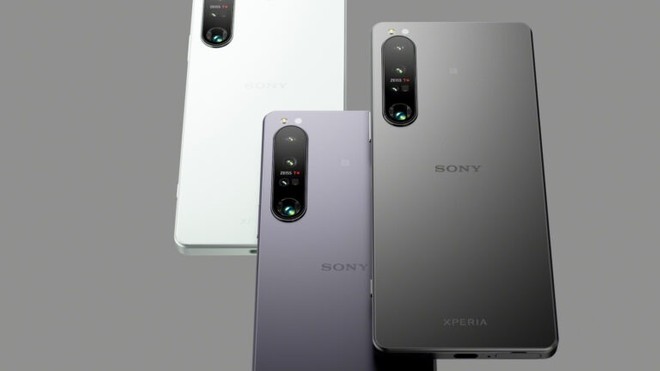
Sony’s failure to capture the attention of the global market is an interesting case study. Although the brand is well-received by those who know it, the tech company has failed to entice a wider audience.
Their first mistake is focusing exclusively on premium phones at high price points. Unlike Huawei, Xiaomi, and Samsung which manufacture phones in various price ranges, Sony’s decision to alienate itself from the majority of consumers has led to its brand name being all but recognised.
Coupled with its unwillingness to strike better deals with local carriers, its strategy left them even more isolated – generating a vacuum for other brands like Xiaomi, Apple, Samsung, and Oppo to exploit. This led to its low market share today, despite superior technological prowess, superb design, and quality.
This YouTube video provides detailed insights on the conundrum that is the Sony XPeria: